


Skip to content

See how the ICM works

The ICM brings clarity, trusted partners and continuity to those adding capacity to the grid. Together, we secure the true value of your BESS assets. No manual entry. No wasted hours.

Get started

BESS Configurator

Find the optimal system for your context.

We simulate the revenues of different MW/MWh configurations within your site's dispatch constraints and show which one delivers the highest returns.

For owners and developers who plan a battery, stand-alone or co-located with solar, wind or other assets, and for installers who size systems for customers.
BESS Broker

Outsource the search for a trusted optimizer.

We run a standardised process to source, compare and contract optimizers, and oversee the switch so your battery keeps earning without interruption.

For owners who are keen to understand which high-performing optimizers exist and what they offer to optimize their battery.

Get started in three easy steps

Step 1: Enter your work email. Enter your business email to begin. You'll be prompted to complete an application. Personal email addresses aren't accepted.

Step 2: Provide your details. We'll ask for basic information: the size of the battery (MW/MWh), dispatch constraints (import/export MW) and the name of your grid operator.

Step 3: Navigate your reality. Most businesses receive a custom report with expected revenues within 1 working day. It's the draft we start from.

Get started

Frequently asked questions

Why do battery owners work with the ICM?

To know what their battery could earn, and whether it earns that. We compare your revenue with the full potential of your site, and when there is more to earn we help you find a better optimizer. Because we own no batteries and are not an optimizer, you can share our numbers with your bank, installer and insurer.

Why do installers offer the BESS Backtest to their customers?

It is a gift that builds trust. Installers can include a BESS Backtest at delivery, so every customer gets an independent view of what the battery earns. It shows you stand behind your system.

Why can I trust the ICM's numbers?

We do not own BESS assets. We are not an optimizer. Nor will we ever be.

What is the BESS Backtest?

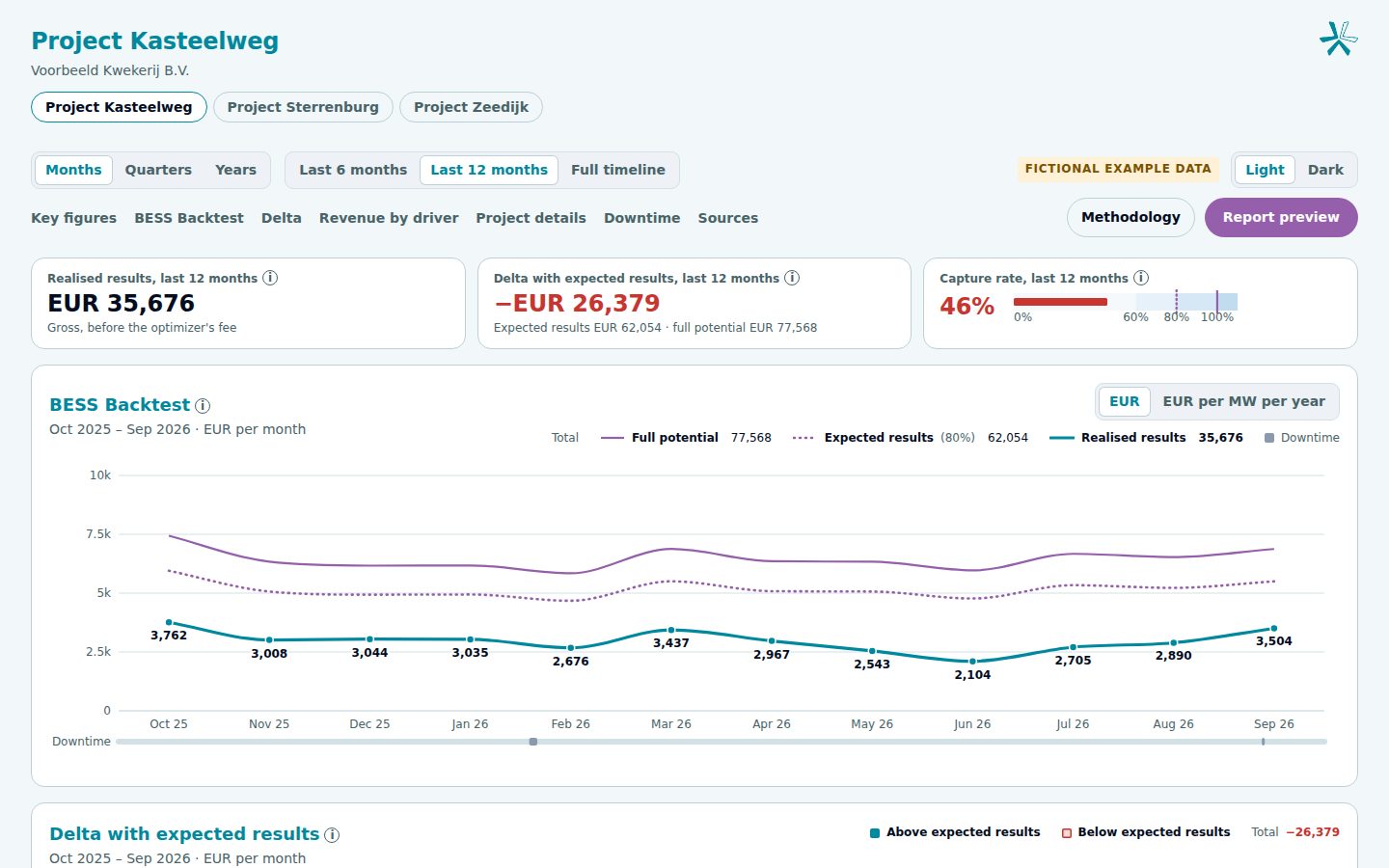
The BESS Backtest compares what your battery earned with the most it could have earned on your site. The result is a capture rate: the share of the full potential that was realised. It shows whether a battery earns what it should, and what holds it back.

What data do I need to provide?

The optimizer report, quarter-hour meter data, data from the energy management system for downtime, and the documents on your grid connection and optimizer mandate. We guide you through the list, and your installer or metering service provider can often deliver most of it.

Who orders a BESS Backtest, me or my installer?

Installers can include a BESS Backtest at delivery, so every customer gets an independent view of what the battery earns. Owners can also order one directly. Talk to us about how this works for you.

How can my installer work with the ICM?

Installers can use the ICM in three ways: size a system with the BESS Configurator before the sale, include a BESS Backtest at delivery so every customer gets an independent view of what the battery earns, and refer owners who want a better optimizer to the BESS Broker. Talk to us to see what fits your way of working.

What if my battery earns less than it could?

You decide what happens next. If the result objectively falls short, the BESS Broker can help you request and compare quotes from other optimizers, test what they would have earned, and guide the switch.